
Mindfulness Meditation for Anxiety: A Beginner's Step-by-Step Guide
Updated: 4 days ago
Sometimes anxiety doesn't arrive with a reason. It just settles in — a tightness in your chest before the day has even started, a loop of thoughts that won't quiet down no matter how many times you try to reason with them. If that sounds familiar, you're not alone in this.
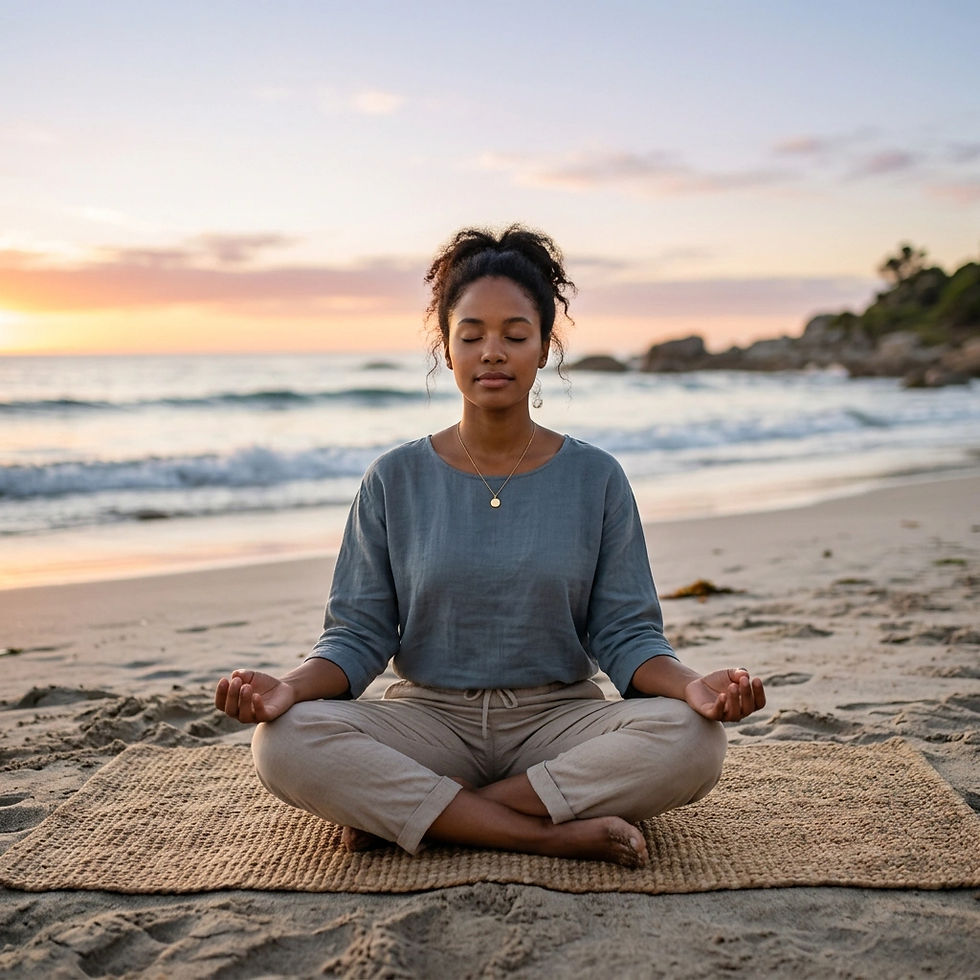
The truth is, anxiety manifests differently for everyone. Anxiety may feel like a sudden wave or a quiet, persistent hum. But one thing remains consistent: it pulls you out of the present moment and into a spiral of what-ifs and worst-case scenarios. Mindfulness offers a gentle way back. Not a dramatic overhaul, not a quick fix — just a practical, science-backed way to reduce anxiety, find a sense of calm, and ease anxiety one breath at a time. And it's appealing because it doesn't demand much, only:
A willingness to learn. Consistent mindfulness practice.
No special skills or equipment are required beyond that.
Ready to begin? Download NirvanaPrana's Calm Mind Starter Kit and discover simple yet powerful techniques to quiet your mind, soothe your body, and start feeling more at peace today.
Guided meditation audios to calm anxious thoughts. Printable worksheets for mindful reflection. Expert tips for building a daily mindfulness practice.
Send Me the Calm Mind Starter Kit. Free download. No spam. Unsubscribe anytime.
Understanding Mindfulness and Anxiety
What is Mindfulness?
At its core, mindfulness is simply paying attention to the present moment — without judgment. It means becoming more aware of your thoughts and feelings, your sensations, and your surroundings as they are, not as you wish they were. Think of it as gently training your mind to stay with the "now" rather than dwelling on the past or worrying about the future.
This focus on the present moment is a quiet but profound shift for your mental health. Mindfulness involves observing your experience with curiosity and openness. When you practice mindfulness, you cultivate a greater awareness and acceptance of whatever is happening — the pleasant and the uncomfortable alike. It's less about achieving a particular state and more about noticing the one you're already in.
And honestly, that's where something begins to shift. You stop fighting your experience and start meeting it with a kind of steady attention. That alone can change the way anxiety moves through you.
How Mindfulness Helps Reduce Anxiety
Mindfulness helps reduce anxiety by directly impacting your nervous system. When you're feeling anxious, your body activates "fight or flight" mode — the sympathetic nervous system releases stress hormones like cortisol, your heart rate climbs, and your muscles tense. Practising mindfulness techniques — such as mindful breathing and meditation — can help calm this response, guiding your body back toward a state of rest.
Research suggests that mindfulness meditation also strengthens the prefrontal cortex, the part of your brain responsible for emotional regulation, while calming the amygdala — your brain's threat detection centre. Over time, this can lead to a meaningful reduction in anxiety symptoms and a deeper sense of calm and mental wellbeing.
One thing that helps to understand: mindfulness doesn't remove anxiety. It changes your relationship with it. You learn to notice anxious thoughts without being swept away by them — and that space between the thought and your reaction is where real freedom lives.
Common Misconceptions about Mindfulness
Many people come to mindfulness with ideas that can set them up for frustration. Some believe it's about emptying your mind completely — which is nearly impossible and not the point. Instead, mindfulness allows you to observe your thoughts and emotions without getting tangled in them.
It's also worth knowing that mindfulness and meditation aren't exactly the same thing. While meditation involves sitting quietly for some, you can actually be mindful during any everyday activity — washing dishes, walking, even waiting in a queue. Mindfulness can help us bring attention to ordinary moments that would otherwise pass unnoticed.
There's another common belief that mindfulness takes a lot of practice and requires hours of dedicated time. While longer meditation sessions can be beneficial, even five minutes a day can be a meaningful way to reduce stress. It takes practice, yes — but far less than most people assume.
The Science Behind Mindfulness Meditation
Research Findings on Mindfulness and Anxiety
The evidence supporting mindfulness for managing stress and anxiety continues to grow. Studies reveal that consistent mindfulness practice can lead to measurable improvements in mental health. Participants who regularly meditate often report a decrease in symptoms of anxiety and an enhanced ability to handle stressful situations.
A growing body of research also shows that the benefits of meditation extend beyond simply feeling calm. Practising mindfulness appears to change the brain's structure and function in ways that promote long-term emotional regulation. Explore how mindfulness helps individuals become more attuned to their thoughts and feelings — leading to a greater sense of control over their emotional state.
Here's the thing: you don't need to meditate for years before the effects begin. Some studies suggest noticeable changes in anxiety and stress reactivity within just eight weeks of regular practice.
Benefits of Meditation for Mental Wellbeing
The benefits of meditation for mental wellbeing are wide-ranging and well-documented. Regular mindfulness meditation can reduce feelings of anxiety and depression, creating a quiet foundation of calm and relaxation that makes daily challenges feel more manageable.
Mindfulness helps enhance self-awareness — the ability to recognise negative thoughts and emotions before they escalate. It's not about suppressing what you feel. It's about seeing it clearly enough to choose how you respond. Practising mindfulness helps us improve sleep quality and support overall mental health, creating a positive ripple effect that touches every part of your life.
This way of reducing stress is a skill that requires gentle dedication. But the rewards — a steadier mind, a calmer body, a greater sense of presence — are well worth the effort.
How Mindfulness Affects the Brain
Mindfulness meditation has a measurable impact on the brain. Studies show that mindful activities can actually alter brain structure and function over time. Specifically, regular practice can strengthen the prefrontal cortex — responsible for attention and decision-making — while calming the amygdala, the brain's fear centre.
This balance supports better emotional regulation and helps in reducing anxiety. Becoming aware of the present can also increase grey matter density in areas associated with learning, memory, and emotional control. By engaging in mindfulness practice regularly, you can cultivate a more resilient and balanced nervous system — one that's equipped to meet anxiety rather than panic.
What this means in practice: the more you meditate, the more your brain adapts to respond to difficulty with clarity rather than fear. That's not wishful thinking — it's neuroscience.
Step-by-Step Guide to Mindfulness Meditation
Getting Started with Mindfulness Practice
You don't have to do this perfectly. Start small. Set aside just two to three minutes a day for mindfulness practice — that's all. Find a quiet space where you can sit or lie down comfortably. Close your eyes gently and bring your attention to your breath. Notice the sensation of each inhale and exhale — the air moving through your nostrils, the gentle rise and fall of your chest.
This simple practice helps anchor you in the present moment and ease anxiety. Even a short meditation session can help reduce stress and begin to shift something in the way you carry tension. Give yourself permission to start exactly where you are. There's no rush.
Breathing Exercises for Anxiety Relief
Breathing exercises are one of the most accessible tools for anxiety relief — and they work remarkably fast. One effective technique is box breathing: inhale for four seconds, hold for four seconds, exhale for four seconds, and hold again for four seconds. Repeat this cycle several times and notice what happens in your body.
Deep, mindful breathing helps slow your heart rate, reduce anxiety symptoms, and promote relaxation. By focusing on the breath, you quiet anxious thoughts and create a little pocket of stillness. The sensation of a long, slow exhale can feel like putting down something heavy you didn't realise you were carrying.
Practising mindfulness through breathwork is one of the most effective breathing exercises for anxiety — and it's something you can do anywhere, anytime, without anyone knowing. These moments of calm attention can profoundly affect your mental wellbeing over time.
Mindfulness Exercises for Everyday Life
You can bring mindfulness exercises into your daily routine in ways that feel natural — not like another item on your to-do list. While washing dishes, focus on the sensations of the warm water and the texture of the soap against your hands. While walking, pay attention to each step — the feeling of your feet meeting the ground, the rhythm of your movement.
By bringing your full awareness to these everyday moments, you begin to practice mindfulness in daily life and train your mind to stay grounded in the present moment. These are powerful mindfulness exercises for anxiety because they gently interrupt the habit of living on autopilot — where anxious thoughts tend to thrive.
These small acts of mindful attention can add up to meaningful improvements in your ability to manage anxiety and depression. You don't need a meditation cushion to be present. You just need the willingness to notice.
Creating a Simple Daily Mindfulness Routine
Building a simple daily mindfulness routine can significantly strengthen your mental wellbeing. Start by choosing a consistent time each day — even just five minutes a day is enough to begin. You might start with a guided meditation, mindful breathing exercises, or a body scan where you slowly move your attention through each part of your body, noticing sensation without trying to change anything.
Incorporate mindfulness into other parts of your day — during your morning coffee, on your commute, or in the moments before sleep. The key is to make mindfulness meditation a regular habit, something as natural as brushing your teeth. Set time for meditation the same way you'd set time for anything else that matters to you.
The more you practice mindfulness, the more natural it becomes — and the better you'll get at staying grounded when anxiety tries to pull you somewhere else.
Overcoming Challenges in Mindfulness Practice
Addressing Common Beginner Struggles
Many beginners find it difficult to quiet their minds during mindfulness practice — and that's completely normal. Here's the thing: the goal isn't silence. It's awareness. Thoughts and emotions will arise. When they do, gently acknowledge each thought without judgment, and then shift your attention back to your breath or chosen anchor.
Be patient with yourself. Mindfulness takes practice, and every session is different. Another common struggle is feeling restless or physically uncomfortable. If this happens, try adjusting your posture or doing a few grounding exercises before resuming your mindful breathing exercises. Notice the sensation of restlessness itself — sometimes simply observing it is enough to soften it.
The goal is not to eliminate thoughts but to ease anxiety by changing how you relate to them — and to cultivate a greater sense of calm, even amidst the noise.
Tips for Consistency in Your Practice
Consistency is what transforms mindfulness from something you try into something that genuinely changes how you feel. Set realistic goals — starting with just a few minutes each day. Find an accountability partner or join a mindfulness group for support. We often look for quick mental wellbeing tips, but gentle reminders on your phone or calendar are often the best way to help you stay on track.
Don't get discouraged if you miss a day. Simply begin again the next day without judgment. These are practical tips to help you build a sustainable habit. Remember, even short, regular sessions of mindfulness can have a real impact on your mental wellbeing and help reduce anxiety over time.
What I've noticed is that the people who benefit most aren't the ones who practise perfectly — they're the ones who keep coming back.
Normalising Your Mindfulness Journey
It makes sense that some days feel easier than others. Your mindfulness practice won't follow a straight line — and that's not a sign of failure. There will be times when your mind wanders constantly, and times when you drop into stillness almost immediately.
The key is to approach your practice with compassion and acceptance. Celebrate the small victories — the moment you notice anxious thoughts, the breath that felt a little deeper than usual. Practising mindfulness helps you build resilience not through perfection, but through the gentle act of returning, again and again. That's part of mindfulness — the returning.
It's not about getting it right. It's about getting closer to yourself.
Recognising Progress with Mindfulness
Signs That Mindfulness is Working
As you continue your mindfulness practice, you'll likely notice subtle but meaningful shifts in your thoughts and feelings. You might find yourself catching anxious thoughts earlier — before they escalate into full-blown anxiety symptoms. Recovery time from stress may shorten, so you bounce back more quickly from challenging situations.
You may experience improved sleep quality, waking up feeling more rested and present. You might notice anxiety without being consumed by it — observing it the way you'd watch weather pass through. These are all signs that your mindfulness practice is helping you cultivate a greater sense of calm and mental wellbeing.
With regular practice, mindfulness can help you manage stress and anxiety — not by making difficult things disappear, but by changing how you meet them.
Measuring Your Growth in Meditation Skills
While mindfulness is a deeply personal experience, there are ways to notice your growth in meditation skills. Reflect on your ability to stay present during everyday activities. Are you more aware of your sensations, thoughts, and emotions without being carried away by them?
Notice how you handle challenges. Are you approaching stressful situations with greater steadiness and self-compassion? Pay attention to your relationships — are you more patient, more able to listen without planning your response?
These are tangible signs that mindfulness and meditation are having a positive impact on your mental health. Growth doesn't always look dramatic. Sometimes it's simply the quiet tools that help you manage daily stressors that used to be automatic.
When to Seek Additional Support
While mindfulness can be a powerful tool for working with anxiety, it's important to recognise when additional support is needed. If you experience anxiety that is severe, persistent, or interfering with your daily life, consider seeking professional help. Therapy for anxiety can provide coping strategies and tools that complement your mindfulness practice. A therapist can help you explore the underlying causes of your anxiety — including anxiety disorders such as generalised anxiety disorder — and develop a personalised treatment plan.
For many mental health conditions, combining mindfulness with professional guidance leads to the strongest outcomes. Seeking help is a sign of strength, and there are many resources available to support your mental wellbeing. You don't have to do this alone.
Conclusion and Next Steps
Encouragement for Your Mindfulness Practice
Mindfulness is a skill that deepens over time — not an instant fix, and not something you need to master before it starts to matter. There will be days when your practice feels effortless, and days when your mind races with anxious thoughts, no matter what you try. Both kinds of days count.
Be patient and compassionate with yourself. The key is to keep showing up, even when it feels like nothing is happening — because something usually is, just beneath the surface. With consistent effort, you'll discover the quiet, steady benefits of meditation in your own life. Practising mindfulness is a meaningful step towards reclaiming your mental health and finding a mindful way of being that fits your life.
Consider downloading NirvanaPrana's Calm Mind Starter Kit, which offers practical tools to help reduce stress and support your practice from day one.
Linking to Broader Stress Management Strategies
Mindfulness is a valuable part of a broader approach to managing stress and anxiety — but it works best alongside other healthy habits. Several lifestyle adjustments can significantly affect your stress levels, including:
Ensuring you're getting adequate sleep. Eating a balanced, nourishing diet. Engaging in regular physical activity.
Practice good time management and set realistic expectations for yourself. Cultivate supportive relationships and seek out moments of genuine connection. By tending to all aspects of your wellbeing, you create a foundation of resilience — strategies to help you cope more flexibly with whatever life brings. This way to reduce stress and anxiety can meaningfully improve your mental wellbeing over time.
Additional Resources and Related Articles
To deepen your understanding of mindfulness and its benefits, explore additional resources — books, articles, and guided meditation apps. Consider joining a mindfulness meditation group or attending a retreat. There are many types of meditation, and exploring them can help you find what resonates most.
Meditation can help you build skills that extend far beyond the cushion. Meditation helps not just in moments of crisis, but in the ordinary, in-between moments where anxiety often hides. Explore NirvanaPrana's website for related articles, tips to help you build your practice, and resources to support you on your path toward greater calm. The best mindfulness practice is the one you actually return to — and even a few minutes a day can help you manage anxiety, ease anxiety and depression, and live with more presence.
Now that you know the basics of mindfulness for anxiety...
I created a free Calm Mind Starter Kit that gives you guided meditation audios, printable worksheets, and expert tips. So you can ease anxiety and stress starting tonight.
Send Me the Calm Mind Starter Kit. Free download. No spam. Unsubscribe anytime.
P.S. Ready to take the first step towards a calmer, more centred you? Download your free Calm Mind Starter Kit now and discover the quiet, steady power of mindfulness and meditation.
FAQ
Q: What is meditation for anxiety, and how can it help symptoms of anxiety?
A: I hear you — anxiety shows up as racing thoughts, tightness, or panic, and it feels overwhelming. Meditation for anxiety is a set of mindfulness exercises for anxiety that teach you to notice anxious thoughts without getting swept away. By practising meditation regularly, you can shift your attention, calm the sympathetic nervous system, and reduce reactivity. It’s not a cure for anxiety disorders, but it’s a practical tool you can use alongside therapy for anxiety or other supports.
Q: How do I start a guided meditation if I’m new to practising meditation?
A: Start simple and be compassionate with yourself. Choose a short guided meditation (5–10 minutes) that specifically mentions anxiety or calm. Sit comfortably, follow the instructor’s voice, and focus on the breath or body sensations. If your mind wanders into a stream of thoughts or anxiety and fear, gently notice it and return to the guidance. I recommend doing this daily for two weeks to build meditation skills and see real change.
Q: What are effective mindfulness exercises for anxiety I can use during a panic attack?
A: When panic hits, grounding exercises help quickly. Try a 5-4-3-2-1 sensory scan (name 5 things you see, 4 you touch, etc.), slow deep breaths, and a short body scan to notice tension. These mindfulness exercises for anxiety bring you back to the present and reduce the sympathetic nervous system surge. Practice them when calm so they’re easier to use in a crisis. If panic persists, seek support for anxiety and panic from a clinician.
Q: How often and how long should I set time for meditation to see benefits?
A: You don’t need hours. Aim for daily practice meditation: start with 5–15 minutes each morning or evening. Consistency matters more than duration. If you can gradually increase to 20–30 minutes, you’ll likely notice stronger benefits. I also suggest adding short mindful pauses during the day — three 1–2 minute check-ins — to bring mindfulness into daily life and reinforce the skills you build in formal practice.
Q: Can mindfulness for anxiety replace my current therapy for anxiety or medications?
A: I wouldn’t recommend replacing established treatment without talking to your provider. Mindfulness for anxiety complements therapy for anxiety and can enhance outcomes, especially for generalised anxiety disorder and panic symptoms. It’s a practical self-help tool and can reduce symptom severity, but for many mental health conditions, you’ll get the best results by combining mindfulness with professional guidance and, if prescribed, medication.
Q: What if I can’t stop my mind from racing — how do I handle a constant stream of thoughts during meditation?
A: That’s completely normal — you’re not broken. Instead of fighting the stream of thoughts, practice noticing them like clouds passing. Acknowledge the content (worry, planning, fear) and gently return to an anchor: breath, body, or a phrase. Over time, this trains attention and reduces automatic reactivity. Using a mindfulness workbook for anxiety or short guided meditations can give structure while you build these meditation skills.
Q: How do I use mindfulness in daily life, not just on the cushion?
A: Bring mindfulness into routine moments: feel water on your hands while washing, chew slowly during meals, or take a calm two-minute breath before emails. These micro-practices are powerful — they help you notice anxious triggers and shift your attention before escalation. I recommend setting gentle reminders and pairing practices with daily habits so mindfulness becomes practical, not another chore.
Q: Are there specific meditation techniques that work best for anxiety and fear?
A: Different techniques help different people. Breath-focused meditations and body scans are great for calming the body; grounding exercises reduce panic quickly. Loving-kindness or self-compassion meditations help when anxiety involves harsh self-judgment. You can experiment to find your best mindfulness practice. If you have an anxiety disorder or severe symptoms, work with a clinician to tailor a meditation practice that complements treatment and supports your mental wellbeing.



Comments